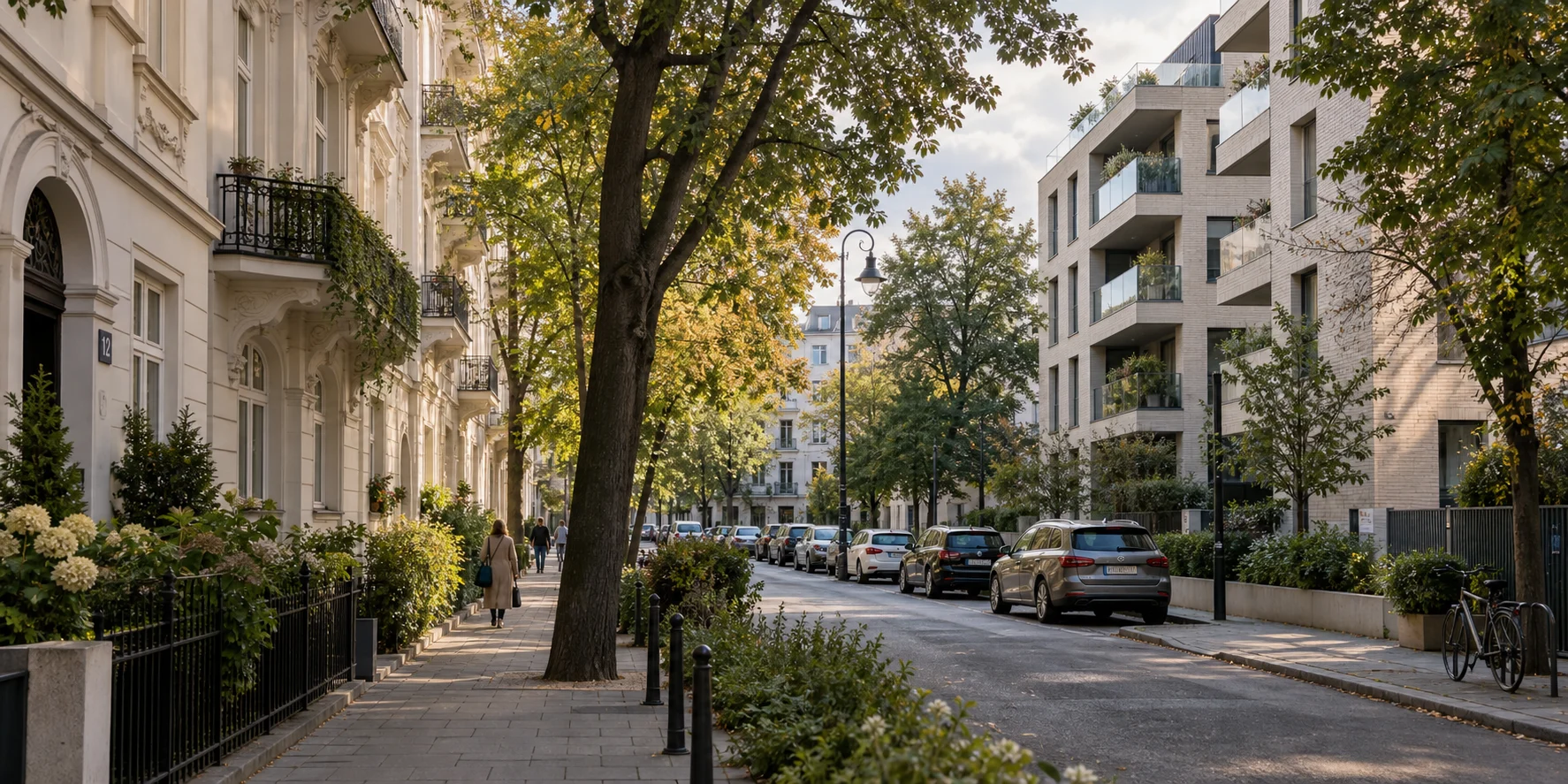
The Warsaw Real Estate Market Is Not a Single Market. What Truly Sets Districts Apart?
Warsaw often appears in analyses as a single entry in a table.
One average price per square meter.
One number of listings.
One trend for the entire city.
The problem is that a person looking for an apartment is not buying "average Warsaw." They are buying a specific property, on a specific street, in a building with a particular history and commute.
That’s why it’s far more accurate to view the Warsaw real estate market as a collection of many smaller markets, each reacting differently to changes.
The Same Price per Meter Can Mean a Completely Different Apartment
Two properties can have similar prices per square meter yet represent entirely different value to the buyer.
In one district, this might be an apartment in an older building, close to the metro and city center. In another, a newer unit with a balcony, garage, and larger area—but a longer commute.
The price alone doesn’t answer the most important question: what exactly are we paying for?
In the Warsaw market, several factors matter, including:
- distance from the metro station or fast rail transport,
- commute time to main workplaces and universities,
- year of construction and standard of common areas,
- layout of the apartment, floor level, elevator access, and parking availability,
- green areas, services, and schools in the immediate neighborhood,
- plans for new developments nearby.
Comparing only price per square meter can mask the differences that later determine comfort of living and ease of reselling.
The Metro Changes the Market, but Actual Travel Time Counts
Proximity to the metro is one of the strongest selling points in Warsaw real estate ads. However, not every location labeled "near the metro" offers the same advantage.
What matters is not just the distance to the station entrance but also the number of transfers, transit frequency, and the walking route required.
An apartment located farther from the center but a few minutes from the metro can be more practical than one geographically closer to Śródmieście but requiring daily time stuck in traffic.
It’s best to measure commute time in minutes, not kilometers, ideally checking travel times in the morning and afternoon on a typical weekday.
Micro-Location Can Matter More Than the District Name
Large Warsaw districts can include very diverse neighborhoods.
Mokotów can mean a quiet street near a park, a pre-war tenement in Old Mokotów, or a new development closer to Służewiec. Wola can be a dense area near the city center, a post-war housing estate, or a rapidly changing neighborhood near new office buildings.
Similar differences appear in Praga, Bielany, Bemowo, Ursynów, and Białołęka.
Therefore, before evaluating price, it’s worth going one level deeper and exploring the specific street:
- what is visible from the windows and whether that view might change,
- what the surroundings are like after dark,
- whether noise is noticeable with windows open,
- where daily shopping is done,
- how long it really takes to get to school, parks, or public transit.
The name of a popular district helps narrow searches, but it’s micro-location that shapes the daily living experience.
Tenement House, Panel Building, or New Development?
Warsaw offers apartments in buildings from nearly every era of its history. Each segment attracts different buyers and carries different risks.
Tenement houses appeal with high ceilings, architectural details, and central locations. However, they require careful checks of the building's condition, utilities, planned renovations, and legal status.
Panel buildings commonly have functional layouts and well-developed neighborhood infrastructure. The building’s technical condition, quality of renovations, and parking availability are important considerations.
New developments provide elevators, garages, and modern common areas. Buyers should also review fees, density of construction, future phases of development, and whether local infrastructure can keep pace with the growing population.
There isn’t a single building type best for everyone. The right choice depends on lifestyle, budget, and how long you plan to own the property.
Buying for Yourself Is Different Than Buying for Rent
A person buying an apartment for their own use may accept a less universal layout if they love the neighborhood, view, or character of the building.
When purchasing for rental purposes, the focus is usually on a broader group of potential tenants. Transport, access to workplaces and universities, maintenance costs, and ease of furnishing become key factors.
A family might prioritize schools, greenery, and an extra room. A young professional will likely choose shorter commute times and a rich selection of services. Seniors may value elevators, nearby clinics, and quiet surroundings more highly.
That’s why the question "which district is best?" rarely has one correct answer. First, you have to know for whom and for how long the property is being purchased.
What Does the Current Supply Tell Us About Warsaw?
Official data from the Statistical Office in Warsaw shows that new apartments continue to be built in the city, but supply is unevenly distributed. Most new projects appear where larger investment areas are available. In mature, central parts of the city, new buildings are rarer and more often supplementary in nature.
This is practical: in districts undergoing intense development, buyers have more options for new units but should carefully assess future building and transport plans. In areas with limited supply, the secondary market and quality of individual offers play a larger role.
Current construction data should be viewed as context, not a price forecast for a specific apartment.
How to Sensibly Compare Warsaw Listings?
Rather than starting with district rankings, create your own short list of priorities.
- Set a maximum daily commute time.
- Separate must-haves from things you can compromise on.
- Compare the total purchase and maintenance costs, not just price per square meter.
- Visit the area at different times of day.
- Check local zoning and planned developments nearby.
- Compare apartments of similar standard, building age, and location quality.
This analysis quickly reveals that a seemingly more expensive apartment may be a better fit, while a cheaper one might require compromises not visible at first glance.
Summary
The Warsaw real estate market does not move to a single rhythm.
An apartment near the metro in Wola functions differently than a family home in Ursynów, and both differ from a new apartment in Białołęka or a tenement in Ochota.
Average prices help indicate general trends, but good decisions are made at the level of a specific street, building, and buyer needs.
On OffDeal, you can compare listings from across Warsaw and get in touch with local agents who know district differences not only from tables but also from daily transactions.
Sources and Further Data
Current information on apartment supply is published by the Statistical Office in Warsaw. National data on residential construction is also available in publications from the Central Statistical Office.